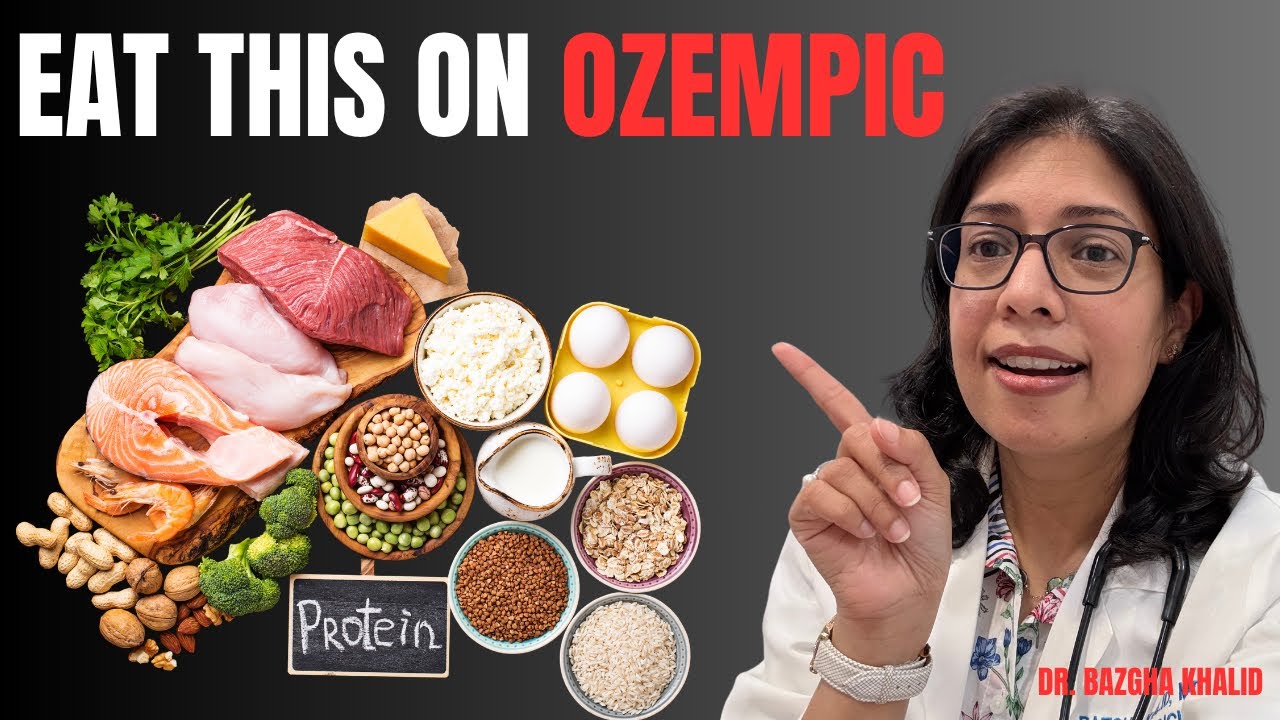
One of the biggest mistakes Dr. Bazgha Khalid sees in her clinic: patients on Wegovy or Zepbound think the medication does all the work. The appetite drops, the cravings quiet, so they eat whatever is easy or they barely eat at all.
Here's what is happening on the inside that nobody is telling you. When you eat too little or the wrong things, your body doesn't just lose fat. It starts eating your muscle too. And muscle is the engine of your metabolism.
A 2025 study tracking over 300 people on GLP-1 medications found that patients were eating critically low amounts of protein. The researchers said there is an urgent need for better nutritional guidance.
The big clinical trials, STEP for semaglutide and SURMOUNT for tirzepatide, showed that somewhere between one third and half of the weight lost can come from lean mass. Not just fat. Muscle.
The medication doesn't directly destroy muscle. But when you are eating far less than usual and not getting enough protein, your body breaks down muscle for fuel instead. That is a problem because muscle keeps your metabolism running, keeps you strong as you age, protects your bones, helps your blood sugar stay stable.
Every bite counts more now. Every meal has to work harder.Bazgha Khalid, MD
The three problems your food has to solve
Dr. Khalid names three nutritional problems she sees in almost every patient on a GLP-1. Problem one: not enough protein. Most adults need 0.8 to one gram of protein per pound of ideal body weight to protect muscle. On a GLP-1, where you might only want to eat small amounts, hitting that target takes intention.
Problem two: not enough fiber. One of the most common side effects is constipation. The medication slows your gut down. Food moves more slowly. If you are not eating enough fiber, your digestive system just stalls. Fiber keeps things moving, feeds the good bacteria in your gut, and helps you feel full longer.
Problem three: not enough fluids. When you are not hungry, you tend to forget to drink. Dehydration on a GLP-1 looks like fatigue, dizziness, headaches. It can make nausea so much worse. Water, broth, herbal teas. Not optional.
1. Eggs
The one Dr. Khalid tells every single patient. Simple, affordable, and one of the most perfect foods when your appetite is small.
One large egg gives you about six grams of high quality protein. Two eggs, which most people can manage even when nausea is a factor, gives you 12 grams. Add one more egg and you are at 18 grams already. Or add egg whites for more protein without much volume.
Eggs contain all nine essential amino acids. That means your muscle can use almost all of it to repair and rebuild. Eggs are also rich in choline, a nutrient that supports your brain, liver, and cell membranes. Most people don't get nearly enough.
The easiest way to eat them: scrambled soft, easy on the stomach. Boiled and kept in the fridge for a grab and go snack. Poached on whole grain toast. Or simple egg muffins. Beat two eggs with whatever vegetables you have, pour into a muffin tin, bake for 15 minutes.
2. Greek yogurt (not the flavored kind)
Not regular yogurt. Greek yogurt specifically, the thick kind. Regular yogurt is strained once. Greek yogurt is strained multiple times. What you are left with is much higher in protein and much lower in sugar.
A 170 gram serving of plain full fat Greek yogurt has around 18 grams of protein. That is serious protein in a very small amount. Perfect for someone who can't eat large portions.
Greek yogurt contains live cultures, probiotics, good bacteria for your gut. When your digestive system is slowing down because of the medication, keeping your gut microbiome healthy matters. These probiotics can help with bloating, constipation, and the general digestive weirdness some people experience.
The key word is plain. Not flavored, not vanilla, not the one with strawberry swirl. Those have added sugar that will spike your blood sugar and then crash it. If plain tastes too sour, add a small handful of fresh or frozen blueberries.
3. Salmon and oily fish
This one has some really interesting science behind it. Salmon, mackerel, sardines, trout, herring. A 100 gram serving of salmon gives you around 25 grams of protein. That is an entire meal worth in one piece of fish.
Here's what makes salmon specifically interesting for GLP-1 users. The omega-3 fatty acids, EPA and DHA, have been shown in research to actually stimulate your body to produce more of its own GLP-1 hormone naturally.
Your gut has cells called L cells. These cells respond to certain foods by releasing GLP-1. Omega-3s are one of the strongest natural triggers. So when you eat salmon, you are supporting the same hormonal pathway that your medication is working through. You are reinforcing the effect with your food.
Omega-3s also reduce inflammation, which is almost always elevated in people carrying extra weight. They support heart health, protect your brain, and may help reduce joint pain.
Sardines are one of the most affordable nutrient dense foods on the planet. A tin has around 20 grams of protein and a full day's worth of omega-3s. Eat them on whole grain crackers with a squeeze of lemon. Cheap, fast, powerful. Aim for oily fish two to three times a week.
When you eat salmon, you're supporting the same hormonal pathway that your medication is working through.Bazgha Khalid, MD
4. Oats
This is the comfort food on the list. And a little controversial. Carbohydrates. But hear Dr. Khalid out.
Oats contain a specific type of soluble fiber called beta-glucan. It dissolves in water and forms a thick gel in your digestive system. That gel slows down how quickly glucose from your food enters your bloodstream. Instead of a sharp blood sugar spike followed by a crash, you get a slow, steady release of energy.
Beta-glucan has been shown to stimulate your gut's L cells to release more of your natural GLP-1 hormone. The fiber in oats actively supports the same pathway your medication is working on. It is synergy.
Oats are also great for constipation. The soluble fiber adds bulk and keeps your gut moving. Portion size matters because the medications slow your stomach. Start with half a cup of dry oats. Cook it with water or milk. Top it with a spoon of Greek yogurt and a small handful of berries. Now you have fiber, protein, and antioxidants all in one bowl.
Why this matters if you haven’t started yet: Not everyone tolerates oats the same. Portion control is key.
5. Berries
Blueberries, strawberries, raspberries, blackberries. Tiny nutritional powerhouses. First, berries are low in sugar compared to most other fruits. You get sweetness without the blood sugar spike.
Second, fiber. A cup of raspberries has around eight grams of fiber. That is almost one third of your daily target in one small serving.
Berries are loaded with polyphenols, plant compounds that give berries their deep blue and red color. Research shows polyphenols have a direct positive effect on your gut microbiome. They feed the good bacteria. A healthier gut microbiome has been linked to better metabolic health, less inflammation, and potentially better response to GLP-1 medications.
Frozen berries work just as well as fresh, and they are much cheaper. Keep a bag in the freezer at all times.
6. Cooked vegetables (not raw)
Dr. Khalid wants to be specific here. Cooked vegetables, not raw. Raw vegetables are not bad. But the medication slows your stomach down significantly. Raw broccoli, raw cabbage, big raw salads, these are high in insoluble fiber that is tough and hard to digest when your stomach is already moving slowly. Putting a load of raw fibrous vegetables in there can cause bloating, gas, discomfort, possibly even pain.
Cooking your vegetables breaks down some of the tough fiber. It makes them much easier to digest. You still get the nutrients, the vitamins, the minerals, the fiber, but your stomach does not have to work as hard.
Broccoli, zucchini, spinach, kale, sweet potato, butternut squash, cauliflower, asparagus, green beans, peas. Nutritionally brilliant. They give you vitamin C, vitamin K, folic acid, potassium, magnesium, all things your body needs more of when you are eating less overall.
The easiest approach: roast a big tray of mixed vegetables on a Sunday. Drizzle of olive oil, pinch of salt and pepper. Roast at 350 degrees for 20 to 25 minutes. Cool and keep them in the fridge. Add them to meals all week long.
Why this matters if you haven’t started yet: If you love raw salads and tolerate them, keep going. But if you are experiencing bloating or gut discomfort, switching to cooked vegetables can solve that.
7. Legumes (beans and lentils)
The double win: protein and fiber. Legumes are one of the only foods on earth that are high in both at the same time. Everything else is either high in protein or high in fiber. Legumes give you both in one food.
A cup of cooked lentils has around 18 grams of protein and 16 grams of fiber. A cup of black beans has around 15 grams of protein and 15 grams of fiber. These numbers are genuinely impressive.
The fiber in legumes is mostly soluble fiber, the same type as oats. It feeds the good bacteria in your gut, helps stabilize your blood sugar, reduces cholesterol, and supports that GLP-1 pathway.
Some people get bloated from beans. The fix: start with smaller amounts. Rinse canned beans very well before eating. Cooked lentils tend to be gentler than large beans like kidney beans. And cook them until they are very soft, because soft foods are easier on the slowed down GLP-1 stomach.
8. Bone broth and soups
This one is not just food. It is a strategy. When nausea is at its worst, usually in the first few weeks of a new dose, eating solid foods can become difficult. Things that are warm, liquid, and easy to sip are often all that is manageable.
Real bone broth, simmered for hours from actual bones, contains collagen, protein, gelatin, and key minerals including sodium, potassium, magnesium, and calcium. When you are not eating much and your electrolytes need support, bone broth is gentle medicine.
Collagen is the protein that makes up your connective tissue, your joints, your tendons, your ligaments, and your skin. When you lose weight quickly, skin elasticity can suffer. Collagen supports that elasticity. It also supports joint health.
Blended vegetable lentil soup is one of the most comforting GLP-1 friendly meals you can eat. You get fiber from the vegetables, protein from the lentils, easy to digest because it is blended, warm and soothing. Make a big pot on Sunday and eat it for two to three days.
The golden rule that ties all of this together: protein first. Every time you sit down to eat, start with the protein, then the fiber and the vegetables, then if there is room, the carbohydrates. This simple habit ensures your most important nutritional needs get met before the GLP-1 fullness kicks in.
You don't need to get this perfect from day one. You don't need to eat all ten foods in one day. Start with one change. Maybe it's starting every meal with protein. Maybe it's swapping flavored yogurt for plain. Maybe it's keeping a bag of frozen berries in your freezer. One change becomes two. Two becomes a habit. And those habits are what carry you past the medication and into a healthier life.
Questions people ask
How much protein do I need on Ozempic or Wegovy?
Most adults need 0.8 to one gram of protein per pound of ideal body weight to protect muscle on a GLP-1 medication. Clinical trials show that one third to half of weight lost can come from muscle if protein intake is too low.
Why does Greek yogurt work better than regular yogurt on GLP-1 medications?
Greek yogurt is strained multiple times, leaving it much higher in protein and lower in sugar. A 170 gram serving of plain Greek yogurt has around 18 grams of protein, compared to much less in regular yogurt.
Can I eat raw vegetables on Zepbound or Mounjaro?
Raw vegetables are not bad, but they can cause bloating and discomfort because GLP-1 medications slow your stomach significantly. Cooking vegetables breaks down the tough fiber and makes them easier to digest while keeping the nutrients.
Dr. Bazgha Khalid is a board-certified internal medicine and obesity medicine specialist who prescribes GLP-1 medications in her clinic. 1,057,092 views on the original video.
Watch the original on YouTube →