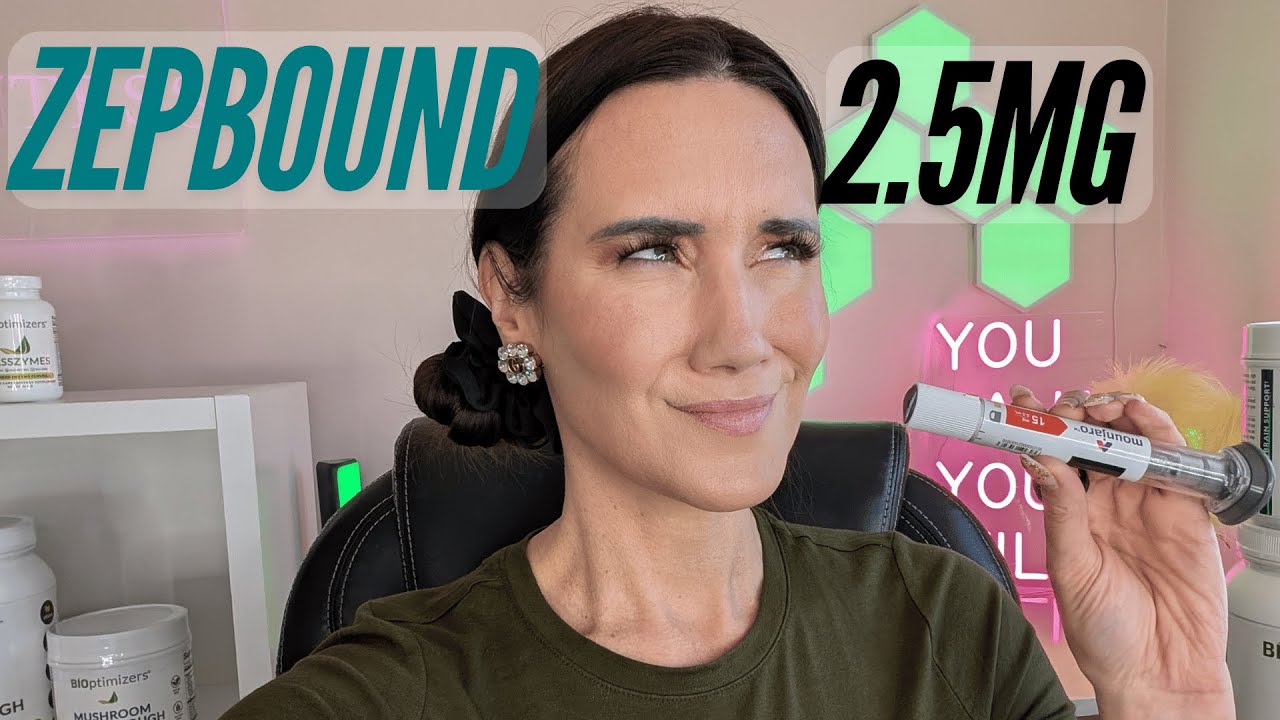
Elizabeth weighed herself this morning and came within a pound of 104 lost. Two years on tirzepatide, more than 100 injections, and she can clip an airplane seatbelt without help. She can ride a horse. She fits on a roller coaster.
She also thought, when she started at 2.5 mg, that none of it would work.
"I didn't think I was going to lose weight when I started," she says. She had been on every diet since elementary school. Weight Watchers, Atkins, keto, a chicken salad diet her parents put her on as a child. She had gained and lost over a thousand pounds across her life. She tried tirzepatide because she was desperate, in pain and convinced she would die young. In the first week she lost more than 10 pounds. Now, at size 14 pants and 27 pounds from her goal, she has a list of nine things nobody told her when she was researching at 2.5 mg. Some are lies she believed. Some are shocks she never saw coming. And number seven, she says, is the one that will make your jaw drop.
1. When to titrate up
The biggest question Elizabeth still gets, even from viewers on higher doses, is when to move up. Her answer is not the calendar. It is food chatter.
She had a telehealth appointment the morning she filmed this. She is on Zepbound 15 mg, the highest dose. The food noise is back. The mental chatter about eating, the thoughts that used to run all day when she was morbidly obese, have returned.
If she had another dose to go to, she would titrate up. She does not, so she is looking for other strategies. But for anyone still climbing, that return of food noise is her signal.
Your insurance may dictate timing. Your doctor will too. But in her experience, if the mental noise about food comes back, that is when you talk to your provider about the next dose. Do not wait for the calendar if your brain is telling you the current dose is not holding.
The food chatter's back, the food noise is back.Countess of Shopping
Why this matters if you haven’t started yet: Titration schedules vary by insurance and provider, but loss of appetite suppression between doses is a common reason patients and doctors discuss moving up early.
2. Alcohol may disappear from your life
Elizabeth has not had a sip of alcohol in over 19 years, so this one does not apply to her. But she has watched it happen to hundreds of people in her encouragement group.
People who used to drink daily, or a couple times a week, now get sick after one sip. Or they have one glass of champagne on New Year's Eve and spend the night with gastrointestinal issues. Or they simply stop wanting it.
She used to smoke before she had kids. She sees the same pattern with alcohol. The brain changes. The craving goes away or gets replaced by something worse than the craving, nausea or a brutal hangover.
Coming out of the holidays she heard it over and over. People who used to go to wine vineyards stopped going. Social drinkers who planned their weekends around cocktails now skip them entirely.
Studies are now testing GLP-1 medications for alcoholism and drug addiction. If you have a genetic predisposition to addiction, this may be a change you notice early. Even if you do not, expect your relationship with alcohol to shift.
Elizabeth also stopped gambling. She used to love penny slots in Vegas. She has been out there several times in the past year for work and has not gambled once. She does not want to. Other cravings, she says, just go quiet.
Why this matters if you haven’t started yet: Tirzepatide and semaglutide affect dopamine pathways in the brain, which is why researchers are studying them for addiction. If you drink socially or regularly, track how you feel after even small amounts early on.
3. Sleep can fall apart, then come back
Elizabeth used to wake up at 2 a.m. and stay awake until 5 a.m., just lying in bed. Massive insomnia, several nights a week. She also had nights where she was completely fatigued and still could not get good rest.
What changed it was magnesium. Specifically, a magnesium supplement with seven types in one capsule instead of the single-type pill she had been taking. A viewer told her to switch. She did, and her sleep data on her Oura ring changed immediately.
She takes two or three capsules of magnesium breakthrough at night. It also helps with constipation, restless legs, aching legs and anxiety. All of those are common on tirzepatide.
More than 70% of people are magnesium deficient, she notes. If you are having insomnia or fatigue that does not resolve, or if your restless legs are keeping you up, talk to your provider about magnesium before you assume the drug is the only cause.
Why this matters if you haven’t started yet: Fatigue and insomnia are both reported on GLP-1s, and they can alternate. Magnesium helps some people, but always check with your provider before adding supplements, especially if you are on other medications.
4. Your social life will change, and some friends will not like it
Elizabeth used to love going out to eat with friends. Now, if she is meeting someone, she wants to walk. She needs to get her 10,000 steps in. When she was morbidly obese she could not walk five miles. Now she wants to.
Some friendships have not survived that shift. Some friends do not want to walk. That is fine, she says, but she does. She is a wife and a mom, and her time is short. If she is spending it socially, it is going to be intentional.
If she does go out to eat, it is going to be a fabulous meal. Not nachos. Not something casual. It is going to be worth it. She went to Panda Express and got 40 grams of protein, and that counted as fabulous because it was intentional.
She used to meet people for coffee. Now she says, how about we walk instead. She used to sit on the couch, depressed, tired, hiding from society. Now she is a homebody who wants to be physical when she does go out.
People in her group talk about the same shift. Friends who used to go to wine vineyards together stop going because one person does not drink anymore. The dynamics change. You are investing thousands of dollars in this medication, Elizabeth says. You start protecting that investment.
She also started thinking about what she wants to do physically now that she can. Dude ranch. Horseback riding. Walking dogs at the animal shelter. Roller coasters. Things she could not do at her highest weight.
If I'm going out, I'm going to eat something fabulous. I'm not just going to go get some nachos.Countess of Shopping
Why this matters if you haven’t started yet: Weight loss on GLP-1s often comes with a shift in how you want to spend time. If your social circle is built around food or drinking, expect friction or distance as your priorities change.
5. Other medications may drop or disappear
Elizabeth is not a healthcare provider, but she has heard this over and over in her group and lived it herself. Medications she thought she would be on for life have either been reduced or eliminated.
She did not expect that at all. With dramatic weight loss, some people titrate down or come off blood pressure meds, diabetes meds and others.
One common example is dizziness. If you feel dizzy on a GLP-1, it may be your blood pressure dropping. If you are on blood pressure medication, that dose may need to come down or stop. Talk to your provider.
Really bad headaches can also be a blood pressure issue. Do not assume every side effect is the GLP-1. Some of it is your body changing and your other meds no longer fitting the new normal.
For some people, this changes financial dynamics. Fewer prescriptions, lower co-pays. It is not true for everyone, but it is worth tracking with your doctor as you lose weight.
Why this matters if you haven’t started yet: Always talk to your healthcare provider before stopping or reducing any medication. Dizziness, headaches and fatigue can signal that doses need adjustment as your weight and metabolic health improve.
6. You will need a new wardrobe, over and over
Elizabeth is wearing a size medium top in the video. It is too tight. She knows it is too tight. But she is in between sizes, and she did not plan for how expensive it would be to keep buying clothes.
She used to wear a size 22 or 24 pants. She wore a lot of designer labels. Part of it, she admits, was a defense mechanism. She was morbidly obese and humiliated, but she was wearing designer labels.
Now she is a size 14, soon to be a 12, and she buys cheaper clothes to get through to the next size. Old Navy sales. Amazon deals of the day. Thrifting. She talks about this a lot in her group.
When she gets to her goal weight, she will invest in expensive pieces again. But for now, she is buying $10 tops that fit okay and will be too big in three months.
She did not think about this when she started because she did not think the medication would work. She thought she would try it, nothing would happen and she would move on. She lost more than 10 pounds in week one and has been buying new clothes ever since.
Why this matters if you haven’t started yet: Budget for clothes if you are losing significant weight. Sizes can change every few months, especially in the first year. Thrifting and sale shopping can help bridge the gap until you reach your goal weight.
7. Hyporesponders exist, and it is not your fault
Elizabeth did not think tirzepatide would work for her. She had been on every diet. She had gained and lost over a thousand pounds. She was desperate and in pain, but she had no faith.
It worked. But she knows some people are hyporesponders. They do not lose weight as quickly, or at all, on the first drug they try. Science shows this happens more often in type 2 diabetics and in men.
If you are a hyporesponder, keep turning over the stones. The answers are coming. It may take longer, but you will get where you want to go.
Wegovy, which is semaglutide, has slightly less data for weight loss than tirzepatide, which is Zepbound and Mounjaro. Talk to your provider about switching if you are not responding.
New GLP-1 medications are coming in 2025, including CagriSema. If you are frustrated, know that relief is on the way. Do not give up because the first dose or the first drug did not work.
If you don't believe that, lean into my encouragement from somebody who did not ever think this was going to work for me.Countess of Shopping
Why this matters if you haven’t started yet: Hyporesponders are real. If you are not losing weight after several weeks at a therapeutic dose, ask your provider about switching from semaglutide to tirzepatide, adjusting your dose or waiting for newer medications.
8. Loose skin is real, and lasers will not fix it
Elizabeth has a lot of loose skin. Her stomach looks like dough. Her thighs are the worst, very doughy, very droopy if she leans over. From the neck up, she says, she looks great. Her collarbone is her favorite piece.
She uses a loose skin cream she is obsessed with. It does not get rid of the loose skin, but it makes her feel better. She also takes collagen, bovine and marine, in her coffee. One scoop, 25 calories, one gram of protein. It helps a little.
But the real answer to loose skin is a plastic surgeon. She is testing a cutting-edge laser for her audience, but the doctor already told her she will probably need surgery. The laser might help a little. Surgery is the only thing that will actually remove it.
She bought sheer black pants to wear around the pool in the summer. You cannot see the loose skin as much when she is walking. She takes them off to get in the pool, puts them back on when she gets out. It is an adaptation.
Her body has been through a battle, she says. A thousand pounds gained and lost. She has grace and compassion for it. The loose skin is the price of the life she has now, and she will pay it.
Why this matters if you haven’t started yet: Loose skin is common after significant weight loss, especially over 50 or 100 pounds. Creams, collagen and some lasers may improve texture slightly, but surgery is the only definitive solution. Plan for it emotionally and financially if it matters to you.
9. Portion sizes will shock you, especially in the first 36 hours
Elizabeth felt her first injection within 24 hours. She feels every injection the most 24 to 36 hours after she takes it. That is when her portion sizes drop the hardest.
She now eats off salad plates instead of dinner plates. She bought small ramekin bowls. Her grocery bill dropped 8 to 10%, which is what studies show happens for people on GLP-1s.
As she gets closer to needing to titrate up, her portion sizes get a little bigger. She has less appetite suppression. But in general, her portions are much smaller than they were before she started.
That change in grocery spending can help offset the cost of the medication if you are paying out of pocket. For Elizabeth, who has paid out of pocket for two years, it has been a noticeable and helpful shift.
I felt it in the first 24 hours. I feel my injection the most 24 to 36 hours after I do my injection.Countess of Shopping
Why this matters if you haven’t started yet: Appetite suppression peaks for many people in the first day or two after injection. If you are meal prepping or grocery shopping, plan smaller portions during that window and slightly larger portions later in the week.
Notice what is not on the list. The pen, the dose, the brand. Every one of these nine shocks happened around the injection, not because of it.
Elizabeth started this medication convinced it would fail. She had failed a thousand times before. Two years later she is 103 pounds down, wearing a size 14 and planning a trip to a dude ranch because she can ride a horse now. She did not see that coming. If you are at 2.5 mg and you do not believe it will work, she says, lean into her belief until you have your own.
Questions people ask
When should I titrate up my Zepbound or Mounjaro dose?
Talk to your provider when food chatter or mental thoughts about eating return, even if your insurance or dosing schedule says to wait. Loss of appetite suppression between injections is a common signal that you may be ready for the next dose.
Will I have loose skin after losing weight on a GLP-1?
Loose skin is common after significant weight loss, especially over 50 pounds. Creams and collagen may help with texture, but surgery is the only way to remove it. Plan emotionally and financially if it is a concern for you.
Why do I not want to drink alcohol on tirzepatide?
GLP-1 medications affect dopamine pathways in the brain, which can reduce cravings for alcohol and other substances. Many people also experience nausea or worse hangovers after drinking, even in small amounts.
Elizabeth, known as the Countess of Shopping, lost over 103 pounds over two years on Mounjaro, Zepbound and compounded tirzepatide. She documents her GLP-1 journey on YouTube for an audience navigating the same medications. 129,581 views on the original video.
Watch the original on YouTube →